
Quality Control Steps Are Essential in Flex PCB Production
Flex PCBs are essential in a wide variety of high-tech applications, and their versatility and space-saving advantages make them a desirable option for many manufacturers. However, their sensitivity to both mechanical and electrical stresses necessitates comprehensive testing and inspection during the production process. This article will explore some of the key steps in this process, including visual, mechanical, and environmental testing and inspection.
The first step in testing and quality control for flex PCBs is visual inspection. Trained technicians conduct this inspection manually or with automated optical inspection (AOI) systems that utilize high-resolution cameras and advanced software algorithms to detect defects like misaligned components, excess solder, and surface contamination. This technology can save time, money, and resources by catching issues early in the production process.
Another common method of flex PCB testing is continuity and isolation testing. These tests verify that all conductive paths on the circuit board are intact and separate, preventing unintended connections between different conductive pathways. These methods also help identify any areas that may require further work, such as soldering or rework.
As a flexible circuit board is typically used in high-frequency applications, signal integrity testing is an important component of the testing and inspection process. This test evaluates the strength and consistency of the signals passed through the PCB to ensure that they meet industry-standard performance standards.
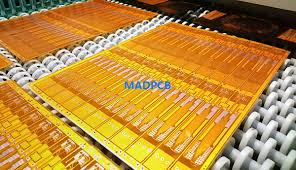
What Quality Control Steps Are Essential in Flex PCB Production?
Since a flex PCB is often used in harsh environments, it’s important to test its ability to withstand the mechanical stresses that it will experience during real-world use. To do this, manufacturers will often conduct environmental testing on the boards, such as humidity and salt spray testing. These tests help ensure that the flex PCB can perform reliably in any environment, allowing manufacturers to offer their customers peace of mind.
Whether it’s an industrial-grade flex pcb production or an aerospace application, a reliable assembly requires thorough testing and inspection to prevent costly errors that could have major consequences. The use of automated optical inspection, advanced electrical testing techniques, machine learning, and non-destructive X-ray inspection are all examples of innovations that have improved the ability to test flex PCBs for defects and ensure their quality.
To be certain that your flex PCBs are up to par, choose a manufacturer who prioritizes quality assurance and has extensive experience with these complex electronic assemblies. Look for a company that uses the latest testing and inspection methods, such as AOI, X-ray inspection, and thermal imaging, to ensure that their products meet the highest industry standards. With the right manufacturing partner, you can be confident that your flex PCBs will be robust and reliable, making them an ideal choice for all of your applications.
The design phase begins with the creation of the circuit layout, typically done using Computer-Aided Design (CAD) software. The designer specifies the placement of components, traces, vias, and other features of the PCB. Design considerations for Flex PCBs include the desired flexibility, material thickness, and bending radius of the PCB.