
Flexible circuit board manufacturers
Flexible circuit board manufacturers cater to varying project sizes by implementing strategies that ensure scalability, efficiency, and quality across different production volumes. Whether a project involves a small batch of prototypes or a large-scale production run, these manufacturers are equipped to meet diverse client needs. Here’s an exploration of how they manage to handle varying project sizes effectively.
Firstly, flexible circuit board manufacturers invest in versatile manufacturing equipment that can be easily adjusted to accommodate different project sizes. This includes machinery that can be quickly reconfigured for various production runs, from small to large volumes. For instance, automated equipment such as pick-and-place machines, reflow ovens, and laser cutters are used in flexible configurations, allowing for seamless transitions between different batch sizes. This flexibility in equipment ensures that manufacturers can efficiently switch from producing a handful of units to thousands without significant downtime.
Prototyping capabilities are a key aspect of catering to small project sizes. Manufacturers often have dedicated prototyping lines that focus on producing low-volume runs quickly and cost-effectively. These lines are optimized for speed and flexibility, enabling rapid iteration and refinement of designs. This is crucial for clients in the early stages of product development who need to test and validate their designs before committing to larger production runs. By offering rapid prototyping services, manufacturers can support innovation and help clients bring their products to market faster.
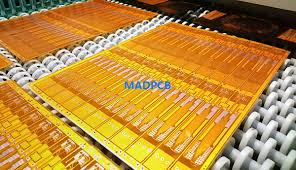
How do your Flexible circuit board manufacturers cater to varying project sizes?
For medium to large project sizes, manufacturers employ scalable production processes. This involves using modular production systems that can be expanded or contracted based on the volume requirements. Lean manufacturing principles are often applied to maximize efficiency and reduce waste, ensuring that larger production runs are both cost-effective and sustainable. Additionally, manufacturers may implement shift work or operate multiple production lines to handle increased demand without compromising on delivery times or quality.
Effective supply chain management is another critical factor in handling varying project sizes. Manufacturers establish strong relationships with suppliers to ensure a steady and reliable flow of materials, regardless of the project size. This includes maintaining an inventory of commonly used materials and components, which allows for quick ramp-up of production when needed. For larger projects, manufacturers coordinate closely with suppliers to schedule deliveries and manage lead times effectively, ensuring that production schedules are met.
Quality assurance processes are scaled to match the project size as well. For smaller batches, manufacturers may employ more hands-on inspection and testing techniques, while larger batches might utilize automated inspection systems to maintain consistency and efficiency. Regardless of the project size, rigorous quality control measures are in place to ensure that every flexible circuit board meets the required specifications and performance standards.
Customization and adaptability are also vital. Manufacturers that cater to varying project sizes offer tailored solutions that meet specific client requirements. This includes custom design services, flexible order quantities, and personalized support throughout the project lifecycle. By offering customizable options, manufacturers can accommodate the unique needs of each client, whether they require a few bespoke units or mass-produced circuits.
Furthermore, advanced project management techniques are employed to ensure smooth handling of different project sizes. Manufacturers use project management software to plan, track, and coordinate various aspects of production. This includes scheduling, resource allocation, and progress monitoring, which helps in managing multiple projects simultaneously. Effective project management ensures that all projects, regardless of size, are delivered on time and within budget.
Finally, customer support and communication play a crucial role. Manufacturers maintain open lines of communication with their clients to understand their specific needs and provide regular updates on project progress. For smaller projects, this might involve more direct and frequent interactions, while for larger projects, dedicated account managers may be assigned to ensure consistent and comprehensive support.
In summary, flexible circuit board manufacturers cater to varying project sizes through versatile manufacturing equipment, dedicated prototyping capabilities, scalable production processes, effective supply chain management, rigorous quality assurance, customization, advanced project management, and robust customer support. These strategies enable manufacturers to efficiently handle projects of any size, ensuring high-quality outcomes and meeting diverse client requirements across different industries.