Can flex circuit boards be used
As the medical industry moves towards more portable devices with greater capabilities, customers are looking for circuitry that offers higher performance in smaller and lighter packages. Rigid-flex and flexible printed circuit boards (FPC) provide the solution in a range of applications.
FPCs are smaller, lightweight and more reliable than rigid PCBs. Their flexibility helps them fit into the small and unique spaces seen in today’s wearable medical devices. They also withstand higher temperatures and are more resistant to mechanical stress, making them ideal for use in medical environments.
Another reason flex circuit boards are becoming increasingly popular is their bio-compatibility. The materials used to make them are FDA-approved for contact with human skin, making them suitable for implantable and non-implantable medical devices. They are also able to withstand repeated bending and flexing without failing. This is an important feature for devices that may be worn or implanted for extended periods of time, such as pacemakers and insulin pumps.
Can flex circuit boards be used in medical devices?
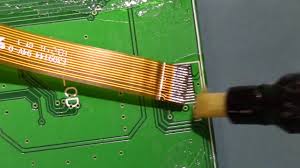
The flexibility of a flex circuit board allows it to be bent to conform to the shape of a device’s components. This reduces the number of connection points, which decreases the likelihood of failure due to wire protection failure. They are also able to withstand higher temperatures and can be shaped to fit the contours of the body.
Medical device manufacturers must be able to manufacture and sell their products with the support of the FDA’s Center for Devices and Radiological Health (CDRH). In order to do this, they must register their company and list their devices with the agency. In addition, they must submit their design to the FDA’s reviewers for approval. This is where the use of a flex circuit board can be beneficial, as it can simplify the design process and increase the speed of the approval process.
A flex circuit board is made from a flexible substrate material such as polyimide. It acts as a dielectric and insulator, with copper conductors etched on the surface. This can be layered up to 12 or more layers, and then a protective coverlay is applied. The copper is then plated with a surface finish such as Electroless Nickel Immersion Gold or Liquid Photo-Imaged Polyimide (LPI). There are several different types of surfaces finishes available, and the choice depends on the application. All of the finishes are designed to protect the copper from oxidation and provide a solderable surface, but some are more durable than others.